A talented group of individuals does not automatically become a high-performing team. Hiring the right people is only the beginning of organizational effectiveness. Teams still need to develop trust, establish working relationships, and learn how to operate effectively together.
Hiring the right people is only the beginning of organizational effectiveness.
Team development is the process of helping teams build the habits and relationships that support long-term success. This article explains what team development means, explores the stages of team development, and covers the practices and team development activities that help teams work together more effectively, including team collaboration tools.
What is team development?
Team development is the intentional process of improving how a group of people works together over time. It involves:
- Building trust
- Clarifying roles
- Strengthening communication
- Supporting natural stages of growth
Team development is not a single workshop or team-building activity. It happens throughout the entire life of a team as people gain experience working together and refine the habits that support successful team collaboration.
Eventually, your focus on this team cohesion will positively influence how work gets done and help you build a great team culture. Teams with clearly defined expectations are better positioned to collaborate effectively and pivot when work doesn’t go exactly as planned.
It’s also worth clarifying that team development is different from a dedicated development team. A dedicated development team typically refers to a group of software engineers assigned to work exclusively on a specific product or client project. Team development refers to the process of improving how any team works together, regardless of its function or structure.
The five stages of team development
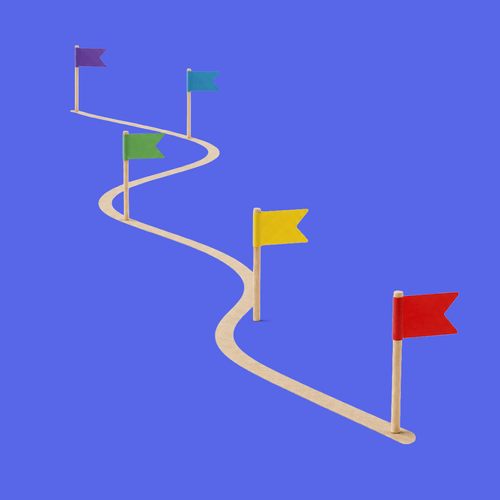
In 1965, psychologist Bruce Tuckman introduced a framework for understanding how teams develop over time. The stages of team development are forming, storming, norming, performing, and adjourning. The model remains one of the most widely used approaches for understanding how groups form, navigate challenges, and improve their ability to work together.
Forming
The forming stage begins when a team first comes together. People are learning who is responsible for what, how decisions will be made, and what success looks like. Energy and even excitement are often high, but uncertainty is high as well.
During this stage, most people are cautious and polite. Conflict is often avoided because people are still building relationships and trying to understand their place within the group. What behaviors are encouraged or discouraged? Who do team members take questions to? Early interactions often establish professional communication patterns that shape the team’s future working relationships.
Leaders can help by establishing the team’s mission, defining specific objectives, and creating confidence around the work ahead. Team members should understand not only what they’’re doing, but why the team exists and how success will be measured. Teams generally move beyond forming when members can stop focusing on how the team operates and start focusing on the work itself.
Storming
The storming stage begins when the team’s initial optimism meets reality. Work is underway, and people start discovering differences in priorities, work styles, and expectations.
This is often where disagreements first emerge. Team members may question decisions, challenge processes, or disagree about who owns certain responsibilities. People who seemed aligned during forming may discover they have very different opinions about how work should be done. At the same time, frustration can grow if progress feels slow or responsibilities remain unclear.
Some common signs of the storming stage include:
- Disagreements about priorities or approaches.
- Frustration around unclear roles or decision-making authority.
- Resistance to processes that seemed acceptable earlier.
- Concerns that the team is spending a lot of time discussing problems without making enough progress.
- Passive-aggressive communication instead of assertive communication.
Many leaders interpret this stage as a problem when it’s actually a normal part of team development. You won’t likely completely eliminate disagreement, but you can help the team work through it productively.
Many leaders interpret this stage as a problem when it's actually a normal part of team development.
Leaders can start with addressing conflict directly, revisiting responsibilities when roles are unclear, giving and receiving feedback, and reinforcing the team’s purpose when priorities begin to drift. Teams move forward when members don’t need to constantly defend positions and instead work to understand why others see the situation differently.
Norming
The norming stage begins when the team develops enough trust to focus less on interpersonal friction and more on the work itself. The disagreements that surfaced during storming have not necessarily disappeared, but people have learned how to address them more constructively in a positive work environment.
This is often where shared leadership starts to emerge. Team members become more comfortable making decisions and taking responsibility for outcomes without waiting for direction from a manager. Processes become more consistent and the team begins establishing routines based on routine expectations.
One of the clearest signs of norming is that feedback starts flowing more naturally. Team members are more willing to share ideas, challenge assumptions, and offer constructive criticism because they trust that disagreements won’t damage relationships. Collaboration becomes easier because people have a better understanding of one another’s strengths and working styles.
Leaders still play an important role, but they can spend more time encouraging participation, supporting decision-making, and reinforcing the behaviors that are helping the team succeed, not putting out fires.
Performing
In the norming stage, a team develops shared processes and working agreements. In the performing stage, those agreements become second nature. People trust each other and can focus almost entirely on the work itself.
One of the defining characteristics of this stage is true interdependence. Team members no longer think only in terms of their individual responsibilities. To them, effective collaboration at work means that they adjust to support the needs of the group and move between different types of work as circumstances change.
Signs a team has reached the performing stage of team development include:
- People can work independently or collaboratively without losing momentum.
- Team members understand one another’s strengths and know when to involve the right person.
- Problems are solved by the team instead of being escalated to a manager.
- Feedback and information flow naturally between members.
Managers don’t direct as much over the daily tasks and spend more time sharing information and removing obstacles that could slow progress. These teams experience higher levels of creativity, stronger commitment, and a greater sense of shared ownership.
Adjourning
The adjourning stage occurs when a team completes its work, a major project ends, or a significant change reshapes the group’s composition. People may move to new roles, join different teams, or take on new responsibilities. While the work may be winding down, the transition still affects how people engage with one another.
This stage often brings mixed reactions. Some team members are excited about what’s next. Others may feel disappointed that a successful partnership is ending. It’s also common for momentum to slow as attention moves toward future projects and responsibilities.
Leaders can help by creating opportunities for reflection before the team moves on. Useful questions include:
- What worked particularly well?
- What challenges would the team handle differently next time?
- What lessons should be carried into future projects?
Recognition is also important. Celebrating achievements, acknowledging contributions, and documenting what the team learned can help preserve valuable knowledge that might otherwise disappear when the group disbands. These practices also support broader employee engagement and retention efforts by helping people feel that their work and contributions mattered.
What makes team development work
Teams move through the stages of development at different speeds, and some never reach the performing stage at all. The difference often comes down to a handful of conditions and practices that influence how people work together every day.
Psychological safety and trust
Psychological safety is the belief that asking questions, admitting mistakes, or raising concerns won’t result in embarrassment or punishment. Helping people show up at work authentically, you drive employee engagement and get better participation. It becomes visible in small moments: someone asking for help before a deadline is missed, a new employee questioning an existing process, or a teammate admitting they don’t have the answer.
Teams can strengthen psychological safety by making those behaviors normal. Leaders who acknowledge mistakes, ask for input, and respond thoughtfully to difficult questions set the tone for everyone else. Over time, trust develops because people learn that speaking up is expected, not risky.
Clear purpose and defined roles
Purpose and ownership become much easier to maintain when they’re tied to specific outcomes. Broad goals such as “improve customer experience” leave too much room for interpretation. Remember to use SMART goals: Specific, Measurable, Achievable, Relevant, and Time-bound. A goal like “reduce average onboarding time by 20 percent this quarter” gives the team a shared target and a way to measure progress.
The same principle applies to responsibilities in cross-functional collaboration. Instead of assigning someone to “support onboarding improvements,” define what they own. Are they responsible for customer communications? Product configuration? Training materials? Ambiguity often appears when responsibilities sound clear at a high level but become unclear during execution.
Open communication and feedback
Quick questions, project decisions, brainstorming sessions, and performance feedback often require different communication channels. Teams tend to communicate more effectively when they’ve agreed on where different types of conversations should happen and how information should be documented.
Active listening is equally important. Instead of immediately responding or defending a position, team members focus on understanding what another person is actually saying. Simple habits such as asking clarifying questions or summarizing key points can prevent misunderstandings that slow progress later.
Feedback should also be part of regular team interactions. The most useful feedback is specific, timely, and tied to observable behaviors. This effective communication skill gives people an opportunity to adjust while the situation is still relevant.
Conflict resolution and accountability
Healthy teams don’t treat conflict as something that automatically needs leadership intervention. Team members are expected to work through disagreements and learn how to compromise. It’s best to try and resolve issues at the lowest appropriate level before escalating them — and to do it quickly before the problem snowballs into a much bigger, resentment-filled conflict.
Conflict resolution skills are some of the most important internal communication best practices, which you can develop by:
- Identifying the specific issue instead of arguing about general frustrations.
- Focusing on facts, examples, and outcomes rather than assumptions about intent.
- Looking for trade-offs and compromises when two priorities are competing.
- Knowing when a decision needs to be made, even if everyone doesn’t fully agree.
Accountability also becomes more peer-driven as teams mature. People follow up on commitments or deadlines and address problems directly with the people involved. You can create an environment where responsibility for results belongs to the team, not just the manager.
Diversity and complementary skills
Teams are strongest when members bring different strengths to the work. One person may be highly analytical, while another excels at building relationships or identifying creative solutions. Combining different perspectives gives you deeper insights and angles so that you can ultimately produce better outcomes.
This becomes especially important when projects involve multiple disciplines. Product development, marketing, engineering, and operations often evaluate problems through different lenses. Teams that recognize and use those differences effectively are often better equipped to solve complex challenges than groups made up of people with similar backgrounds and experiences.
Team development activities that move teams forward
Team development activities are most effective when they address a specific challenge the team is facing. Here are some of the common exercises to consider to practice team development:
- Structured retrospectives. Review what is and isn’t working after a project, sprint, or major milestone. Focus on identifying changes the team can apply moving forward.
- Working agreements workshops. Create shared expectations around direct communication, decision-making, response times, and meeting participation so everyone is operating from the same playbook.
- Role clarity exercises. Map responsibilities across the team to identify overlaps, gaps, and areas where ownership may be unclear. Knowing when synchronous versus asynchronous is appropriate is a good place to start.
- Feedback practice. Give team members opportunities to practice delivering constructive feedback in lower-stakes situations before more difficult conversations arise.
- Meeting discipline. Establish clear guidelines for when a discussion requires a meeting and when an update can be shared instead. Teams that are intentional about running an effective meeting use their time better and get to the bottom of issues with greater accuracy.
Support every stage of team development with Slack
Team development happens in the day-to-day moments, and you need practices and tools that support those moments.
Slack gives teams a shared space to communicate and share information as they move through every stage of development. Having an async-first infrastructure gives your team flexibility and freedom in how they interact and accomplish work, which empowers them to develop as individuals and a streamlined team.
Explore Slack for team collaboration to see how you can support stronger teamwork across your organization.
Team development FAQs
 ¡Genial!
¡Muchísimas gracias por tus comentarios!
¡Entendido!
Gracias por tus comentarios.
¡Uy! Estamos teniendo dificultades. Por favor, inténtalo de nuevo más tarde.