Cada pocos meses, algo cambia. Lo que haces hoy en Slack no era posible hace tres meses.
En abril, Slackbot aprendió a actuar. En mayo, aprendió a ver. Desde el 24 de junio, aprende de ti, de tu equipo y de todo tu conjunto de herramientas. Y escucha.
Esta es la historia de esos tres meses, además de la razón por la que el capítulo más reciente transforma lo que los dos primeros hicieron posible.
Abril: Slackbot aprendió a actuar
El equipo desarrolló esta capacidad porque pedirle ayuda a Slackbot y luego hacer el trabajo por tu cuenta no era realmente recibir ayuda. En abril, eso cambió. Slackbot ahora puede emprender acciones, como crear registros en Salesforce, ejecutar tareas de forma programada y crear habilidades que hagan el trabajo dentro de los sistemas que tu equipo ya usa.
Una IA que responde preguntas es útil. Pero responder una pregunta sobre una negociación es muy distinto a actualizar el registro de la negociación, registrar la actividad e identificar el seguimiento. Una te ahorra unos segundos de búsqueda. La otra mejora tu rendimiento y hace avanzar tu trabajo.
Raveesh Raina, ingeniero de ventas en Salesforce, creó una habilidad para registrar su actividad después de las llamadas con clientes. Compartió su creación y, al cabo de tres semanas, 466 de sus colegas ya la estaban usando. El 73 % la descubrió por la difusión de boca en boca. Se ahorraron cuarenta y tres minutos por persona, por semana.
Así es como el mejor proceso de una persona se convierte en una capacidad al alcance de todos.
Mayo: Slackbot aprendió a ver
El equipo desarrolló esta capacidad porque la mejor respuesta del mundo no sirve de nada si está en el historial del navegador de otra persona. En abril, Slackbot podía actuar. En mayo, podía ver.
En mayo, Slackbot logró ir más allá de Slack e incorporar sus hallazgos en la conversación. Buscar en la web, leer un PDF, crear un gráfico nativo a partir de datos sin procesar o seleccionar cualquier texto y pedirle a Slackbot que lo explique en contexto. El resultado no desaparece en una herramienta aparte ni en un archivo que nadie abrirá. Se integra directamente en el entorno donde el trabajo ya está ocurriendo, listo para que todo el equipo lo vea y lo aproveche.
Esto es lo importante para los demás miembros del equipo. La persona que hace el trabajo no tiene que convertirlo en un producto aparte. La conversación es el producto.
24 de junio: Slackbot aprende de ti, de tu equipo y de tus herramientas, y escucha
Estás saliendo de una reunión. Se te ocurre una idea. Tienes las manos ocupadas.
Es precisamente en este momento cuando necesitas a Slackbot. Con Voice Actions, esto es posible. Abre Slackbot en tu teléfono y explica lo que necesitas que suceda: registrar la llamada, actualizar el registro, documentar la idea antes de que la olvides. Slackbot ya conoce tu contexto, por lo que no tienes que volver a explicar nada. Solo di lo que quieres en voz alta.
Esto funciona porque Slackbot ya te conoce. Y cuanto más lo usas, más sabe de ti.
Además, no espera a que le pidas algo. Slackbot puede emprender acciones de forma programada, tomar medidas cuando llega un mensaje a un canal o activarse cuando alguien agrega una reacción. Eso es un tipo de IA diferente al de una que solo interviene cuando la mencionas.
La IA que conoce a tu equipo, no solo a ti
En abril y mayo, el enfoque se centró en las capacidades. Junio profundiza en algo más difícil de construir: el contexto. El equipo lo desarrolló porque queremos una IA que conozca nuestro trabajo. En abril y mayo, el enfoque se centró en las capacidades.
La mayoría de las IA ya tienen memoria. Sin embargo, hay una diferencia entre una IA que recuerda lo que le dijiste y una que sabe lo que sabe tu organización. Algunas IA evalúan la situación cuando se lo pides. Slackbot lo hace desde el inicio. Otras IA aprenden lo que tú les contaste: tu función, tus preferencias, el contexto que escribiste en un panel de configuración. Slackbot aprende lo que tu equipo realmente hizo. La decisión que se tomó en un canal el mes pasado. El hilo del proyecto donde se encuentra la verdadera respuesta. El contexto de la negociación en Salesforce de la llamada que se realizó en Slack. No tuviste que explicarle nada. Ya estaba ahí.
Cuanto más trabajas en Slack, más precisa se vuelve. Si le pides que redacte un texto de seguimiento de una negociación en la que no has trabajado en seis semanas, ya sabe cuáles son las partes interesadas, los puntos conflictivos y lo último que dijo tu promotor. No porque se lo hayas dicho, sino porque allí es donde el trabajo ocurrió. Ese contexto se acumula.
No se detiene contigo
Con Memoria, Slackbot mejora cuanto más lo usas. Con Habilidades, esta mejora se extiende a tu equipo.
Piensa en la última vez que un colega descubrió algo que te habría ahorrado una hora, y nunca te enteraste. La forma perfecta de prepararse para una llamada de renovación. Un prompt que convierte un conjunto de datos caótico en algo que un vicepresidente puede leer en 30 segundos. Ese tipo de conocimiento solía transmitirse de boca en boca, si es que llegaba a transmitirse. Con Slackbot hay una manera de compartir y aprovechar lo que tus colegas ya descubrieron. Cuando alguien de tu equipo crea una habilidad, todos se benefician.
Todas tus herramientas, una sola conversación
El contexto solo es útil si puede seguirte. Con el MCP, lo hace. La mayoría de los equipos trabaja con cinco aplicaciones o más. Con el MCP, Slackbot integra todas las herramientas en la conversación: Google, Atlassian, Box, Notion, DocuSign y más. No tienes que salir de Slack para obtener la respuesta. No tienes que volver a explicar el contexto. Slackbot llega donde está el trabajo y lo integra nuevamente al sitio donde la conversación ya está teniendo lugar.
Ese es el hilo conductor de todo esto. Con Memoria, Slackbot mejora para ti. Con Habilidades, las mejoras se extienden a tu equipo. El MCP integra el resto de tus herramientas en la conversación. Todos los miembros del equipo tienen acceso a una IA que se vuelve más inteligente no solo porque ellos la usan, sino porque todos a su alrededor también lo hacen.
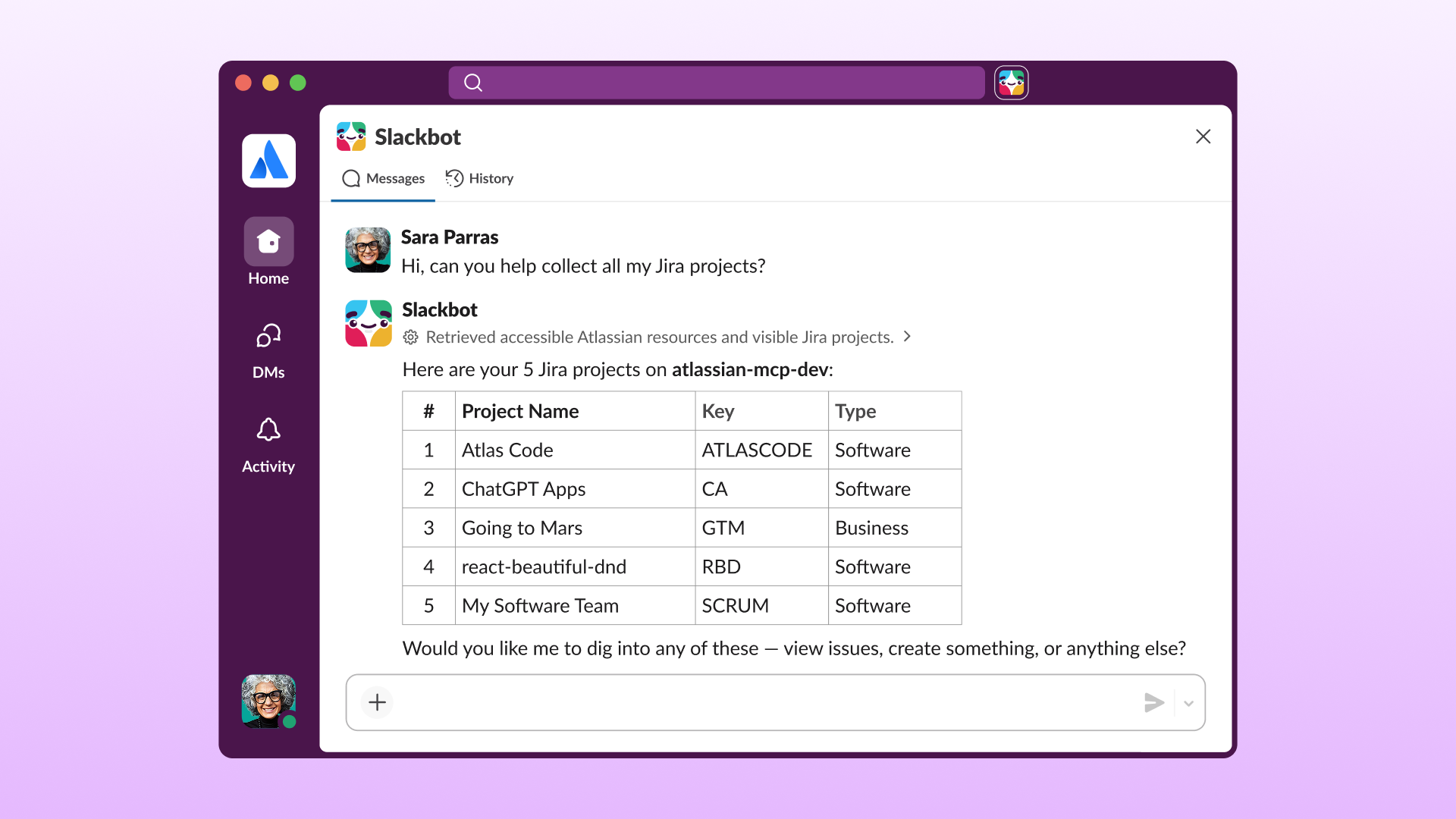
Y, para los empleados que nunca abrían Slackbot porque sentían que escribir era una tarea más, ahora pueden simplemente expresar lo que necesitan en voz alta.
Abre Slackbot. Pregúntale: “¿Qué sabes sobre mí?”.
Este es el inicio. A partir de aquí, solo puede mejorar.
 ¡Genial!
¡Muchísimas gracias por tus comentarios!
¡Entendido!
Gracias por tus comentarios.
¡Uy! Estamos teniendo dificultades. Por favor, inténtalo de nuevo más tarde.