About this template
Sales resources are critical tools for your organisation. Beyond sales team productivity, they help reps to become more effective, build momentum in the sales process and close bigger deals. They can’t accomplish these goals, though, if your team can’t find the right materials when they need them. That’s where the Slack sales resource hub comes in. It brings sales resources together so that reps can search, access and share instantly. Here’s how to use it:
- Click ‘Use this template’. This creates a dedicated Slack canvas and a centralised sales enablement hub. It puts all your resources, templates and videos in one convenient place.
- Fill in FAQs and resources. Add core sections such as ‘Products’, ‘Internal documentation’, ‘Pricing’ and ‘Channels’. This makes it easy for your team to find exactly what they need, when they need it.
- Add use-case demo videos and links. Your sales reps can visualise best practices in action with a clear roadmap to sales success.
- Keep content fresh and up to date. Assign owners to update resources regularly. Notify your sales team of updates with pinned announcements or Slack reminders so that they never feel out of the loop.
How sales teams benefit from easy access to sales resources
Sales is not a matter of luck. It takes an effective strategy to build strong relationships, close more often and maximise deal size.
Even with the best strategies in play, though, ineffective sales resources at critical points in the sales journey cost your organisation. Missed opportunities and ineffective deals add up quickly. Strong sales resources are a critical part of building a successful sales team.
Resources such as product one-pagers, case studies, testimonials and email templates equip reps with the tools that they need at every stage of the sales process. The potential benefits of easy access to these resources include:
- Improved productivity. The right assets speed up onboarding, simplify workflows and support sales automation, making reps more efficient.
- Faster time to close. Teams can prioritise sales activities that close deals by recognising what drives results and what doesn’t.
- Prioritised customer experience. Resources allow teams to deliver consistent value throughout deal cycles with tailored interactions and messaging.
- Increased revenue. Resources equip teams with what they need to sell based on value and offer insights to uncover cross-selling and upselling opportunities.
Types of sales resources
The right assets and materials guide reps at each step in the deal cycle. Here are the essential assets that your team needs to have on hand to stop wasting time and start closing deals.
Product information
Serious prospects often want product-focused information to inform their decision. This is where deals can fall flat if your sales team doesn’t have documents organised and on hand to send before, during or straight after a sales call. Readily available resources mean that your reps can keep opportunities moving through the sales pipeline.
Data sheets, feature overviews and demo videos show prospects how your product works and the value that it delivers. Likewise, competitive comparison guides give customers practical information so that they can make an informed choice – plus, you can differentiate your organisation, build trust and offer proactive answers to their questions. Accurate product data and customer insights improve sales forecasts, helping teams to perform at their best.
Sales playbook and scripts
Sales is often framed as an art form, but your team doesn’t have to rely only on gut instinct to be effective. Sales playbooks and scripts are powerful tools that turn experience into repeatable success.
For example, discovery and qualification questions help to ensure that a lead is a qualified prospect worth pursuing, reducing wasted time and resources on the wrong opportunities. Also, outreach templates and follow-up frameworks make it easy to keep the conversation going and build momentum in customer relationships.
Case studies and social proof
Customer success stories, testimonials and reviews are vital parts of modern digital sales, helping your sales team to build credibility early and demonstrate tangible results. They also reduce reference requests, protecting your top buyers and most loyal advocates.
ROI calculators or before-and-after use cases are another powerful tool to help prospects understand the actual value of your product or service. It places value on measurable business outcomes to overcome financial objections and gain buy-in from finance, CFOs and other gatekeepers.
Pricing and proposal materials
Pricing breakdowns and custom quote templates provide potential customers with clarity – no more confused prospects who step back and don’t buy. These templates are clear and concise quotes that encourage them to take the final step and become a customer.
Likewise, contract templates or order forms recap important sales details so that everyone is on the same page. They’re vital to streamlining procurement and sales order processing. Templates simplify this process and help reps to avoid costly, time-consuming mistakes.
Enablement tools and training
Sales enablement tools train and coach sales reps, reducing new-rep onboarding time, improving win rates and encouraging smarter upselling. Powerful integrations for sales teams connect CRM guides, sales enablement platforms and product demo libraries, giving your team a central place for everything – so they can focus on selling instead of searching. Also, access to internal training videos and call recordings provides valuable real-world examples to help them sharpen their skills.
Best practices for managing a sales resource hub
Sales resource hubs are convenient and efficient, but they’re only as valuable as the material that they contain and their accessibility. Here are some practical ways to improve your resources, keeping them as relevant and effective as possible:
- Audit content quarterly for accuracy and usefulness. Thoroughly review your content regularly to ensure that your materials are relevant, accurate and maintain consistent messaging.
- Encourage sales rep feedback. The more eyes you have on your content, the better it will be in the field. Ask for input on the resources that you have and the challenges that reps face during deal cycles. Not only can they point out ways to improve, but their feedback can also help you to uncover new resources to boost productivity, consistency and deal size.
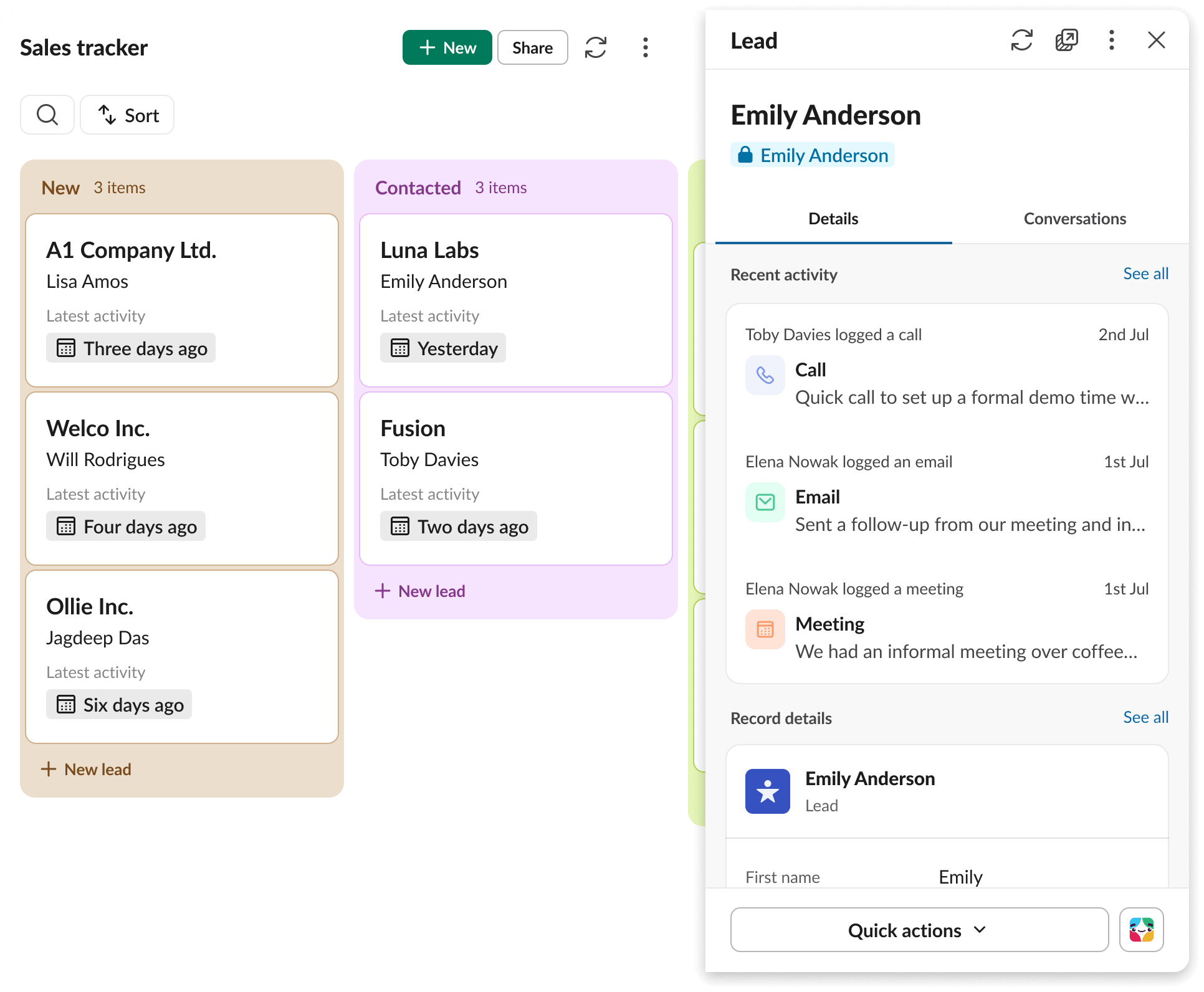
- Integrate your CRM and sales tools for easy access. CRM integration is a great way to keep reps in one place without constantly switching tabs or tools. This reduces context switching and improves efficiency. It also enhances data accuracy and speeds up collaboration. For example, with the Slack Sales Cloud integration, your reps can pull product details or pricing without switching tools. It eliminates friction, improves sales and operations planning, and leads to higher close rates.
Create reliable, repeatable success with a sales resources hub
Don’t leave your sales up to luck or intuition. Instead, use your team’s past successes to create repeatable systems and consistent messaging with the help of a centralised sales resources hub. It streamlines your sales process and frees up your sales team to focus on what matters most – making connections and closing deals.
Get started with Slack sales templates and help your team to sell smarter, not harder.