
About Asymbl
Pioneering a new model where human and AI-powered workers operate as one unified workforce
Asymbl is a fast-growing workforce orchestration company helping businesses adopt hybrid teams made up of humans and digital workers. Founded in 2023 and led by CEO Brandon Metcalf and President and COO Greg Symons, the company operates as its own “customer zero,” testing every solution internally before it reaches clients, including a digital labor strategy that aims for 30% of its workforce to be digital by 2026.
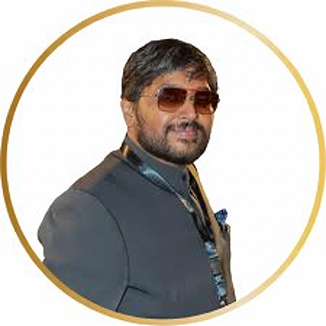
“Slack is a lifestyle.”
The challenge
Scaling faster than traditional hiring or fragmented processes could support
In early 2025, Asymbl faced a rapid-fire growth surge. Meeting that kind of expansion with traditional hiring alone was unrealistic: capacity was strained, onboarding lacked consistency, and teams were losing time to manual processes scattered across disconnected systems.
In addition to this onboarding strain, operations were slowed by the “swivel-chair effect” of jumping between tools, and the company needed a way to effectively coordinate people and processes at scale. For a business built on workforce orchestration, these growing pains made it clear that they needed a better way to unify work, information, and collaboration.
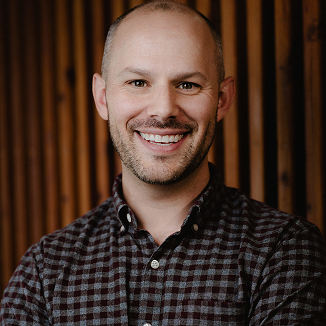
“We had to retrain people on how to think about using Slack as part of our culture, and changing the mindset of how work gets done.”
How Asymbl works better with Slack
Slack powers digital worker orchestration, automation, and seamless human–agent collaboration
Asymbl runs its entire business inside Slack, treating it as the orchestration layer and user interface for people, processes, systems, and an increasingly sophisticated digital workforce. “Slack is the way our organization thinks,” said President and COO Greg Symons. “It’s the place where our people and our digital workers actually work together.”
Digital labor as a people strategy
Asymbl approaches digital labor through the lens of people, not IT. “The shift to a hybrid workforce only works when our teams rethink how their work gets done, not just which tools they use,” said Chief Revenue Officer Michael Clark.
That mindset shapes every rollout. Instead of asking what can be automated, Clark said the company begins with why: “You have to start with enhancing people, not displacing them,” he said. “Digital workers become an extension of the team, enabling reskilling, reducing the weight of repetitive work, and allowing Asymbl to empower people through Slack.”
Take the story of Theodore Frank, their digital SDR. Built on Slack and fully integrated into the revenue engine, Theodore engages six times more leads than a human SDR and has generated more than $575,000 in economic impact. But that’s not the most striking result.
Because Theodore consistently delivered higher-quality leads, BDR Mitch Canaday was able to accelerate his pipeline, outperform expectations, and ultimately earn a promotion into an Account Executive role. The digital worker didn’t replace a job — it elevated one.

“Digital workers should enhance the human worker’s performance and career growth, not limit it. Slack is the perfect way to bring people along in this journey.”
Orchestrating a unified human and digital workforce
More than 92 digital workers live inside Asymbl’s Slack workspace, each operating through the conversational interface so employees don’t have to switch tools or learn new systems.
“Slack is the natural place for both human and digital workers because it brings together enterprise search, organizational memory, and integrations with Salesforce, Google Drive, GitHub, and Jira,” said Chief Digital Labor & Technology Officer Shivanath Devinarayanan.
The backbone of this system is their organizational memory layer, which AI in Slack turns into a practical, first-stop enterprise search experience. Whether a person or an agent asks a question, Slack knows where the information lives. This capability makes it possible for agents to act with an understanding of history, context, and standards. “With our Security Review Agent, engineers can push code at midnight and still get eyes on it,” said Devinarayanan. “They don’t have to wait for a manager the next morning. The agent knows our patterns and guidelines.”
Reinventing core processes through Slack
Asymbl’s hiring surge is one of the clearest examples of what happens when digital workers operate directly in Slack. By embedding their Recruiter Agent into the flow of work, the team eliminated the confusion, delays, and handoffs that typically slow down hiring. “We hired 100 people in 100 days with one and a half recruiters,” Clark said.
Built in their ATS and surfaced entirely in Slack, the agent accelerated every step of the workflow, from approvals to candidate screening. What would have been an operational bottleneck became a coordinated sprint: 17,000 resumes narrowed to 1,800 pre-screens. “It all happened in Slack, in the flow of work,” said Clark.
The team applies this same Slack-native approach across the Aymbl experience for employees. For example, Devinarayanan learned the Deno SDK and Slack CLI to create tools on demand as the company evolved. Take their Slack canvas–driven onboarding experience, a workflow that automates pre-boarding, IT setup, HR coordination, and resource distribution.
The impact of this workflow was immediate and measurable: four hours of setup time saved per hire, an hour of repetitive admin work eliminated, and a more than 50% reduction in ramp-up time. “I still go back to my onboarding channel every day,” Devinarayanan said. “It’s my single source of truth for everything from guidelines to compliance.”
A culture built around continuous improvement
While automation and agent orchestration drive efficiency, Asymbl’s cultural adoption of Slack is what cements it as their operating system. A six-week internal SPIFF challenged managers to improve their work using Slack’s native features, including summaries, recaps, to-do lists, and more. That competition alone produced more than 30 workspace enhancements and normalized a culture where teams document processes, share improvements, and reinforce best practices directly inside Slack.
Together, these systems allow Asymbl to operate like a company many times its size, which shows up in real business outcomes: a 427% increase in prospect engagement and a 3,789% ROI on their digital labor strategy. “Slack is where work happens, and where the whole company thinks,” said Devinarayanan.

“Slack really makes it feel like I have a teammate, not a tool.”
Next steps
Scaling toward a future where digital labor delivers 30% of all work alongside employees
Looking ahead, Asymbl plans to deepen its digital labor strategy with expanded use of Agentforce and next-generation AI agents supporting areas like sales coaching, partner management, and website engagement. “By embedding agents directly into Slack, it creates significant value and cohesion across the team,” said Clark. The team is also rolling out Salesforce Partner Cloud to replace manual spreadsheets with automated partner onboarding and unified reporting.
As they continue scaling toward 30% digital labor by 2026, Slack remains the foundation. “Slack is not just our messaging tool,” said Symons. “It’s the operating system for how Asymbl works.”