
About Village Hotels
Welcomes guests staying the night and members dropping by for a swim, a coffee, or dinner
At Village Hotels, a day can involve a gym visit, a Starbucks coffee, a meal at the pub and grill, or a wedding celebration. The business has about 150,000 leisure members alongside its hotel guests and event customers. Roughly 4,700 employees make those experiences possible, including housekeepers, chefs, bartenders, sales teams, and General Managers. Nine in ten work on site, where high-quality service takes shape in the details: a timely answer, an early insight, a problem handled efficiently.
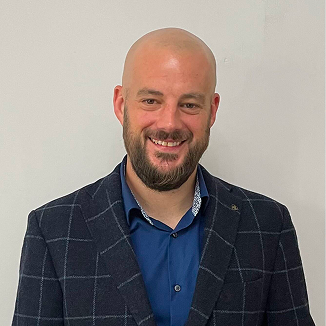
“We cut our customer notification time from 48 hours to under 20 minutes. That’s the difference Slack makes to our guests.”
The challenge
Monthly slide decks and scattered chats made it hard to get consistent information to hotel teams
Village Hotels runs on operational precision. Across 34 hotels, hundreds of managers and team members depend on having the right information at the right moment, whether that’s a commercial update, a pricing change, or a guest service issue.
Village Hotels’ workforce reflects a wider gap in how companies support people away from a desk. Boston Consulting Group estimates that deskless workers make up 70% to 80% of the global workforce. At Village Hotels, that share is closer to 90%, yet getting a consistent answer to the people working in hotels was difficult (likely because a scant 1% of annual software investment targets frontline workers). Staff received updates through Gmail, Google Chat, HR platforms, and Google Slides.
“Before Slack, we had a very fragmented landscape for communications,” said CTO Jon Davis. “WhatsApp channels started springing up all over the place, and by the time it got to the end of the chain, the message had completely changed.”
Central teams sent monthly commercial and General Manager packs that could run up to 130 slides. “Our frontline employees’ day-to-day work comes first,” said Davis. “When we send them lengthy slide decks every month, they have to take days out of their week to digest the information and make sure everyone else understands it.”
Guest issues could stall, too: When a call came into the contact center, resolving it often meant finding a particular person at a hotel who might be busy or off shift. A guest needing help right away could be left waiting while the issue moved between teams.
“We went from 130-slide decks that took days to digest to real-time updates in Slack that reach our hotel teams.”
How Village Hotels works better with Slack
One window connecting the frontline to central functions, Salesforce data, and AI
When Village Hotels mapped its Salesforce transformation — spanning Data Cloud, MuleSoft, Sales Cloud, Service Cloud, and Tableau — the team made a deliberate architectural decision about Slack. It would serve as the single operational interface where every Salesforce output, every real-time alert, and every escalation surfaces for the frontline.
“We were very clear at the beginning,” said Davis. “We were not replacing one chat app for another. We see Slack as the window to work every day.”
Bringing updates into the flow of hotel work
Instead of sending a single monthly slide-deck pack, central functions now posts in dedicated Slack channels: #it-updates, #marketing-updates, #revenue-updates, and #customer-updates. Hotel and leisure club staff follow the channels relevant to their role, and central teams use built-in read-confirmation tracking to verify updates have landed before visiting a property.
The shift cut the information lag from weeks to hours. Tableau Pulse alerts add a further operational layer: When revenue or benchmark hours drift outside predefined thresholds, a notification lands directly in the relevant Slack channel. “Before, we might not spot a problem until the weekly report arrived. Now we get an alert in Slack and can act that day,” Davis said.
To manage its commercial pipeline, Village Hotels uses Sales Elevate, which surfaces lead and opportunity data directly in Slack. When a regional director notices a soft sales period or leads that need attention, they open a swarm with the hotel team in a shared channel. No phone calls, no parallel WhatsApp threads.
“Our frontline workers are the people impacting the business on a scale,” said Davis. “Even if it’s improving their day by 1%, when you do that across 4,700 people, it makes a massive impact.”
Addressing guest complaints sooner
Village Hotels’ contact center and membership services teams are based centrally, but some guest complaints need help from the hotel or leisure club. Previously, resolving a case meant tracking down a particular person. If they were busy or off shift, the guest had to wait.
Now, a case in Service Cloud can bring the relevant hotel staff into a Slack channel. Others can step in when the usual contact is unavailable. “We’ve seen our time to resolution drop massively,” Davis said. “And we’re only going to start increasing that further.”
That faster response gives Village Hotels a better chance to address a complaint while the guest is still on site and restore their experience. For a business built around repeat stays and leisure memberships, each issue handled well is another opportunity to earn the next visit.
“What used to be a phone call, a WhatsApp message, and a wait is now a Slack channel, a swarm, an answer in real time — and much happier guests.”
Next steps
Tapping Slack to address issues sooner, keep guests informed, and unlock new tools
Village Hotels wants guests and members to trust that they’ll be looked after, even when something goes wrong. With Slack as its work operating system, frontline teams can find answers, bring in colleagues, and respond in real time.
A pool closure shows how that could work for its roughly 150,000 leisure members. Previously, notifying affected members could take up to 48 hours, leaving someone to discover the closure after arriving for a swim. Village Hotels is building a Slack workflow that will let staff record the issue, location, and expected resolution time, then trigger a targeted SMS or email through Marketing Cloud Next. Its goal is to reach affected members within 20 minutes, giving them time to change their plans before they arrive.
“Slack is our window to work. As we bring more AI into the business, our frontline teams will have one familiar place to get answers, take action, and look after our guests,” he said. “When there’s a problem, we’re giving people pre-warning, and that’s where we’re really seeing the benefit of having this integrated Slack ecosystem.”
Village Hotels launched Agentforce Voice and is already routing the same bidirectional flow that connects its Salesforce ecosystem through Slack. As the group expands its use of AI platforms, including Gemini and standalone tools, Slack is positioned as the single interface through which all that work reaches frontline staff. Its first rollout established channel governance and Salesforce integration faster and at lower cost than forecast, giving future deployments a head start.