
About Cello
Turning word-of-mouth into product infrastructure for modern software companies
Founded in Munich, Cello helps subscription and software companies turn their users, partners, and communities into scalable growth channels. Built by a remote-first team of 24 people across nine countries, Cello is headquartered in Munich, with teammates spanning the UK, Estonia, the Philippines, South Africa, and beyond. Its platform connects directly with a company’s product, CRM, and payment systems to power referral and partner programs that feel native to the customer experience. Cello works with companies ranging from fast-growing AI startups like VEED and Bolt to established products like Remote and Miro, some reaching tens of millions of monthly users.
The challenge
Building a company and product before the team, tools, or office exist
Before founding Cello, Stefan Bader saw word of mouth stall at another SaaS company. Referrals were bringing in new customers, but without a way to reward the people making them, they could not scale or sustain the channel.
Bader went looking for software that could turn word of mouth into a formal referral program, but it didn’t exist. The more he looked, the clearer the gap became: Real referral infrastructure did not just move data between systems. It needed a fintech layer that could move monetary rewards to individuals across countries, currencies, and compliance environments. That gap became Cello, the AI-powered referral platform for SaaS.
Building Cello created another challenge. Bader needed specialized talent before he had the size, structure, or office footprint of a larger company. The default would have been to centralize, hire locally, and build every feature in-house before launch. But Bader did the opposite.
“Munich has great universities, but the talent we need is distributed,” said Bader. “The best people on our team don’t all live in tech hubs. They’re two hours north of London, in Tallinn, in Kraków, in South Africa.”
Remote-first gave Cello access to the team it needed, while raising the bar for how the company communicated, collaborated, and chose the tools that would hold the business together.
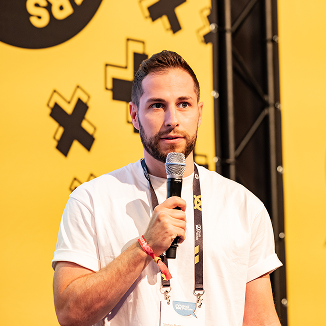
“We spun up Slack on day one. For a smaller company, I don’t think there’s a real competitor. It scales with us, so I don’t think we’ll ever need to replace it.”
How Cello works better with Slack
From a two-person chat to the operating layer of the whole company
Cello standardized its stack on day one. Slack for communication; Google Workspace for docs, mail, and calendar; and HubSpot for CRM. Slack and Google Workspace have run side by side ever since, with Slack as the place where conversation and coordination happen, and Google Workspace as the document and email layer underneath. The two are connected closely enough that Stefan often replies in a Slack thread and it posts as a comment back on the Google Doc, so he never has to open the file.
For Bader, who used Microsoft Teams at a previous company, the choice was deliberate. “I was using Microsoft Teams in my last company after we were acquired by a larger corporate,” he said. “It was clear to me that when I build my next company I will start with Slack.”
Shipping before every feature was built
Slack also helped Cello move faster before every product feature existed. Instead of delaying launch until every customer-facing surface was ready, the team used the tools already in its stack to cover the gaps: Notion for early analytics, Slack for real-time implementation testing, and shared channels for fast feedback.
“The first product functioned end-to-end, but we didn’t have a portal where you could see your analytics,” said Bader. “We automated the product testing in Slack because that’s where you could get real-time events. We built the absolute barebones version and leveraged existing infrastructure to ship much faster.”
Bringing customers into the work
Cello expanded its use of Slack with its first customers. Today, the company runs more than 400 Slack Connect channels, and nearly every customer relationship lives in a shared channel rather than an email thread. When a customer chooses Cello, they’re brought into Slack for onboarding, customer success, feature education, and program-improvement advice.
It works partly because the whole ecosystem is already there. “99% of the customers we’re working with have Slack. Especially earlier stage companies, but also larger scale and really innovative companies,” said Bader. “In the tech space they use Slack.”
Slack Connect becomes the natural place to run those relationships. On the rare occasion a customer isn’t in Slack and the team falls back to email or Google Chat, the process and the customer experience visibly break.
“We do nearly all our customer success through Slack: constant check-ins, educating customers on new features, flagging ways to improve their programs,” said Bader.
“For B2B software, delivering the customer support experience in Slack is 10x better than anything else we could do.”
Turning conversations into shared knowledge
Because Cello’s product is infrastructure, customers often ask detailed setup questions tied to their own codebase and tech stack. The team upgraded to a paid Slack plan to access Slack’s AI features, giving them a faster way to find answers already captured in prior conversations. The payoff also being a knowledge base nobody had to assemble.
When a customer asks a setup question in a Slack channel, the team can prompt Slackbot to get the answer they need. Since Cello’s product keeps changing, recent threads and explanations help keep answers current. Every helpful reply across hundreds of shared and internal channels becomes context and an FAQ the next person can use. “With Slackbot, we’re able to build up shared context without actually having to build it,” said Bader.
Bringing AI into everyday workflows
Cello is also exploring how AI can help its team find the right internal context faster. Rather than treating customer knowledge as something locked inside scattered tools or individual inboxes, the team is looking at ways to make approved internal information across its entire tool stack easier to summarize, retrieve, and act on before meetings, QBRs, and support conversations.
Slack remains central to that workflow because so much work already happens there. Product updates, customer-success notes, engineering tickets, documentation changes, and operational nudges from tools like Mintlify, Jira, Moss, Personio, Figma, and Chili Piper all flow into Slack, giving the team one place to spot updates and move work forward.
“Slack brings the right internal context into our AI workflows in a controlled way,” said Bader. “That makes it easier for the team to prepare, respond, and follow up without changing where we already work.”
Huddles cover the quick conversations async work still needs, from internal coordination to urgent customer threads. “You can break things out into threads and jump on a huddle in seconds to help find a solution,” said Bader.
Meeting the security bar customers already trust
Cello’s product sits inside the systems its customers rely on to run sensitive workflows, from HR platforms to fintech tools. For a European infrastructure company, that makes data privacy, GDPR, and security review part of every serious customer conversation.
Those reviews require Cello to account for the tools in its stack, but Slack has not been the point of friction. Because many of Cello’s customers already use Slack themselves, shared channels start from a place of familiarity rather than explanation.
“Most of the companies we work with are using Slack, so there’s a high level of trust.”
What’s next
Pulling more of the product and the company into Slack
As Cello scales from hundreds of customer channels toward thousands, the company plans to move more work into Slack, like reporting, permissioning, and customer-triggered actions. This lets customers get more done where they already work, without always logging into Cello’s referral platform.
“Slack started as an internal communication tool used by two people and went on to become an essential part of the business,” said Bader. “There’s a natural tendency for tools like ours to make more things available inside Slack, because it’s more frictionless for everyone.”
For Cello, Slack made a remote-first company possible in the first place. Four years later, it’s where the company communicates, supports customers, and brings more work closer to where decisions happen.