Introduction
For businesses to succeed, employees need easy access to corporate knowledge. When they can’t find the answers they’re looking for, projects slow down and profits shrink. Inefficient knowledge sharing can lead to large businesses losing an average of $47 million dollars per year.
Corporate knowledge too often gets lost in the shuffle of day-to-day business because it’s not being shared company-wide. Key information gets buried in email threads, scattered across various apps, or only exists within certain departments.
Enterprise search in Slack harnesses the power of AI so users can access all of their corporate knowledge and data without ever having to leave the app. Enterprise search is an expansion of Slack AI, which already saves users an average of 97 minutes per week.
In this guide, we’ll take a closer look at five barriers to corporate knowledge sharing and how enterprise search in Slack can help solve them.
Barrier One: Difficulty Finding Experts
When employees are working on a project and need support from an internal expert, it can be challenging to know who to turn to. This is especially true in large enterprise organizations, where many different team members are involved in different phases of projects.
Employees often waste valuable time consulting with the wrong people while trying to find a subject matter expert.
On average, employees spend 1.8 hours every day, or 9.3 hours per week, searching and gathering information.
How enterprise search can help:
Enterprise search can quickly analyze all conversations across Slack and other integrated platforms. You can use the search results to determine who is talking about a certain topic and then reach out to that person or drop into a thread.
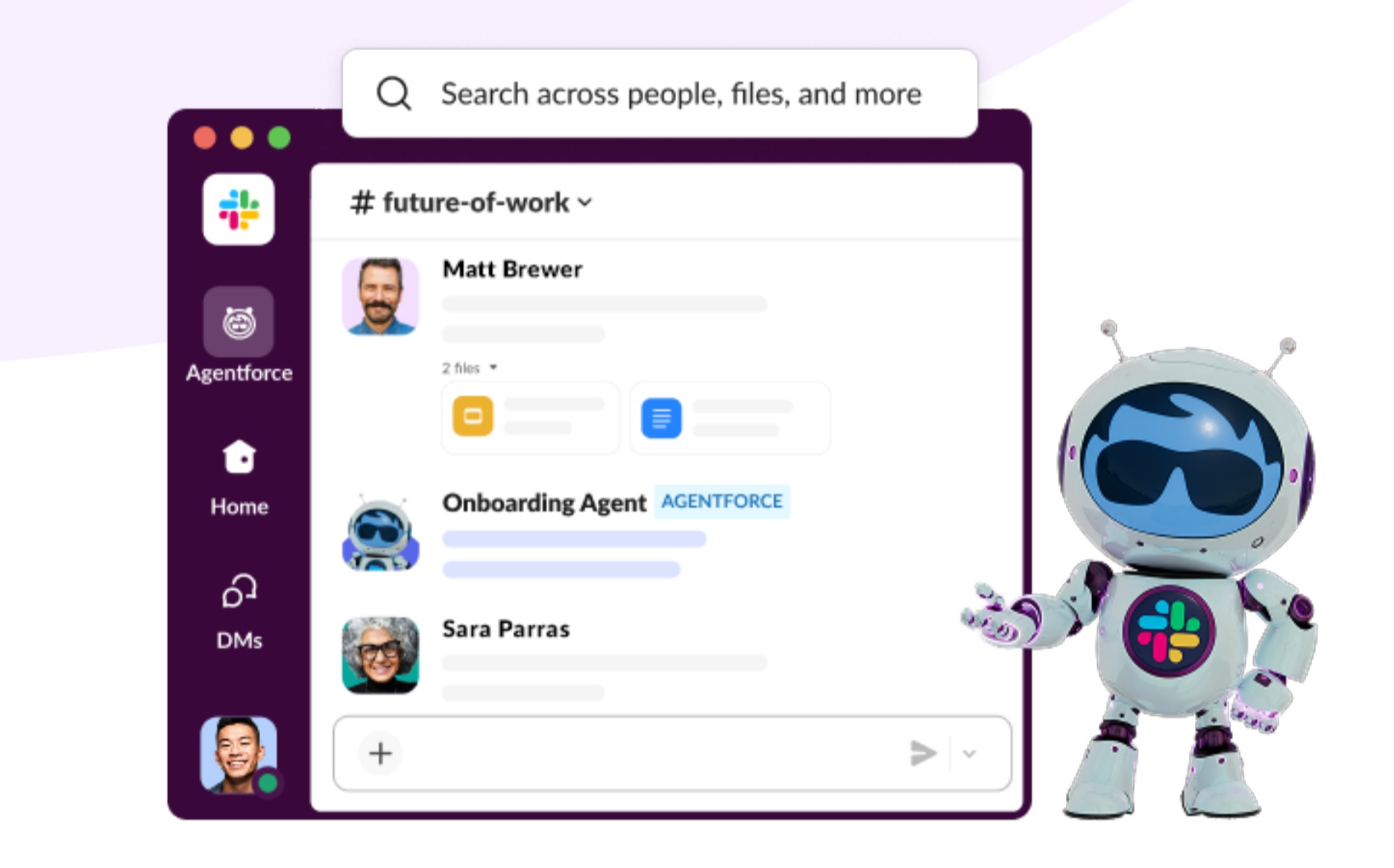
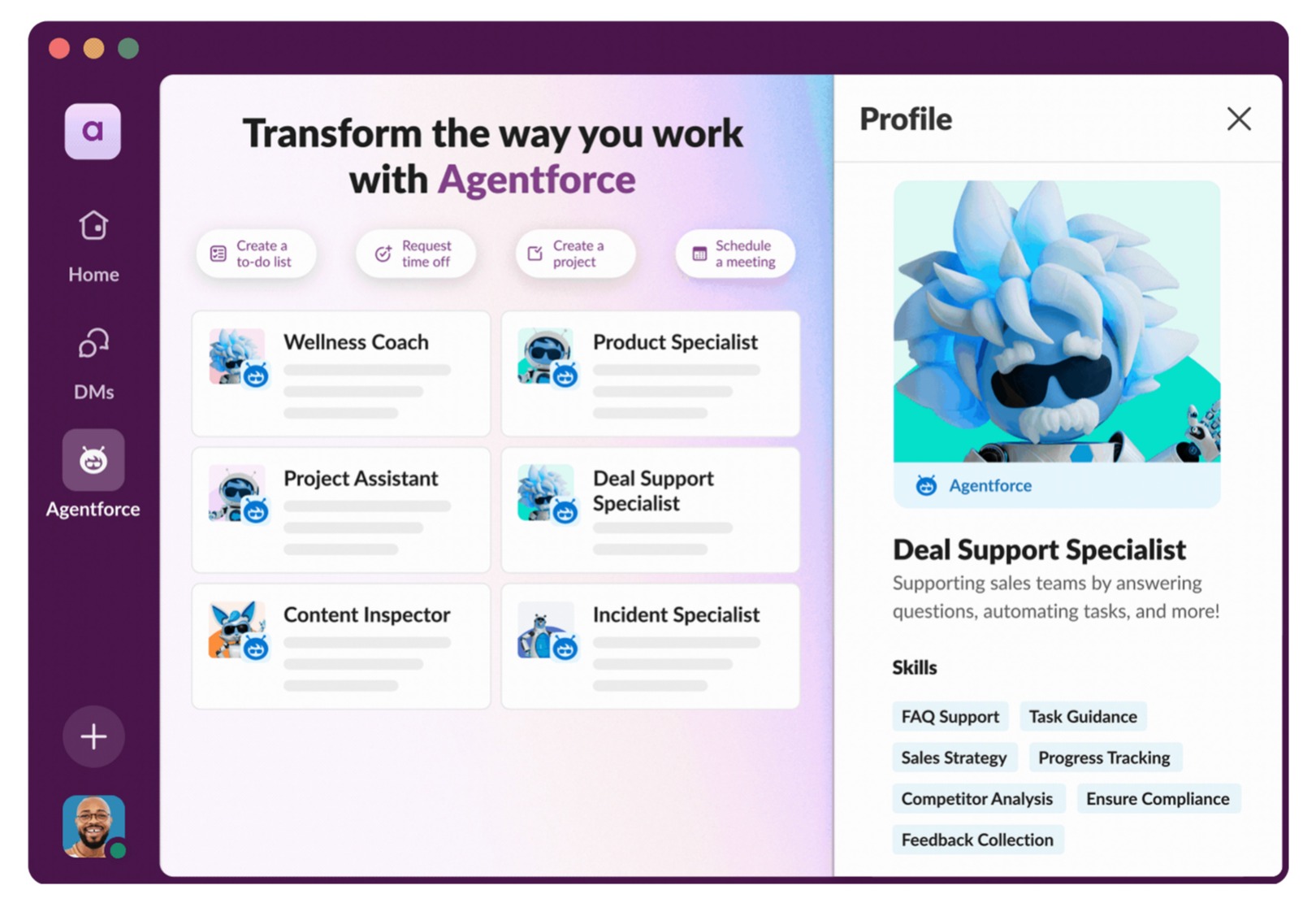
If a human teammate isn’t available to answer a question, Agentforce in Slack allows employees to chat with an AI agent. These agents seamlessly interact in channels, DMs, or threads and can provide helpful insights and guidance in real time.
Barrier Two: Siloed Departments
Every department has its own way of working, interacting, and storing information. This can make it very difficult for people in other departments or business areas to retrieve information.
These informational siloes inhibit cross-department collaboration and slow active projects to a crawl. Siloed departments can also negatively impact the customer experience.
If teams aren’t sharing knowledge of customer data and interactions, this could lead to a fragmented and off-putting experience for customers.
How enterprise search can help:
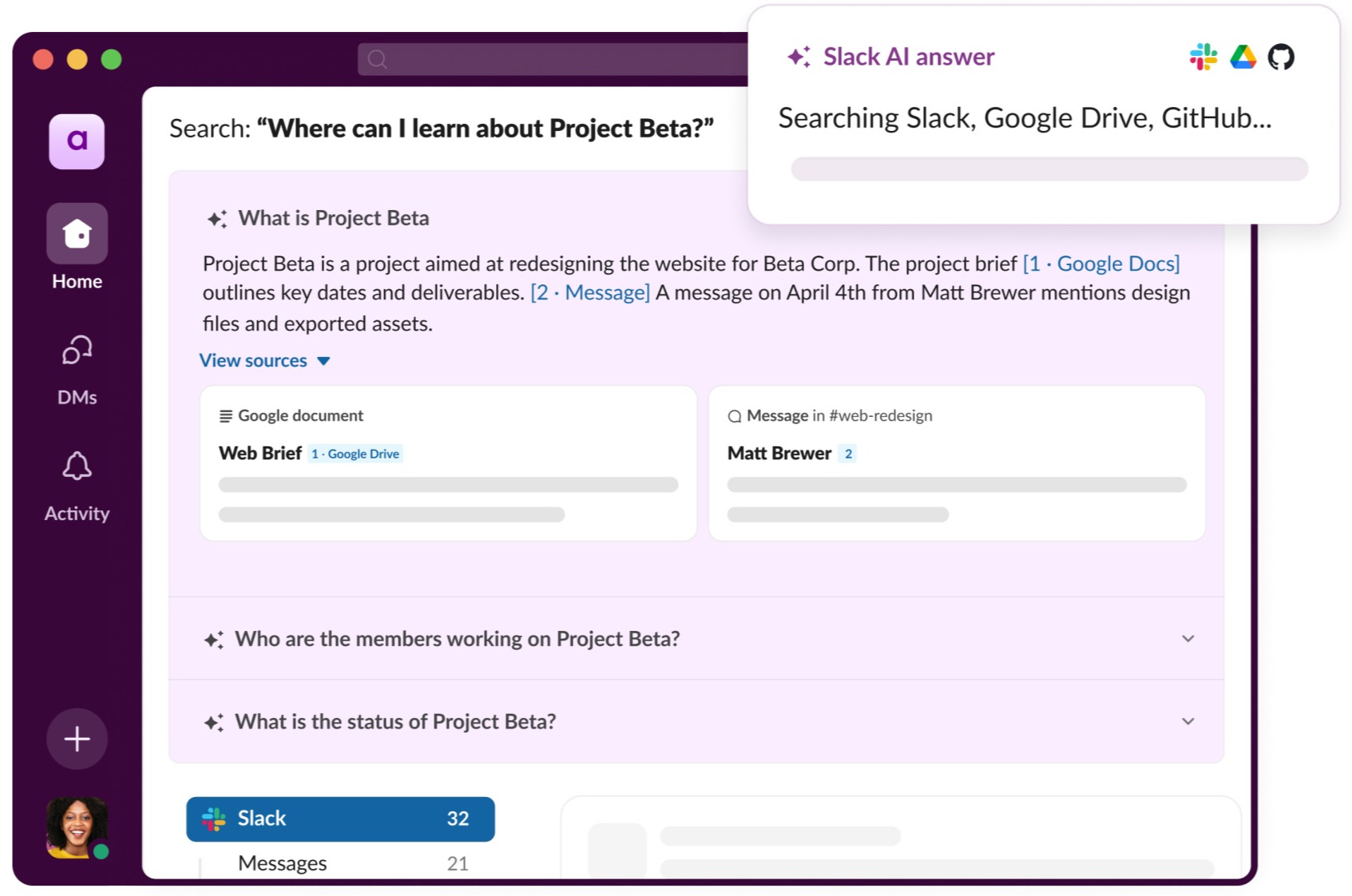
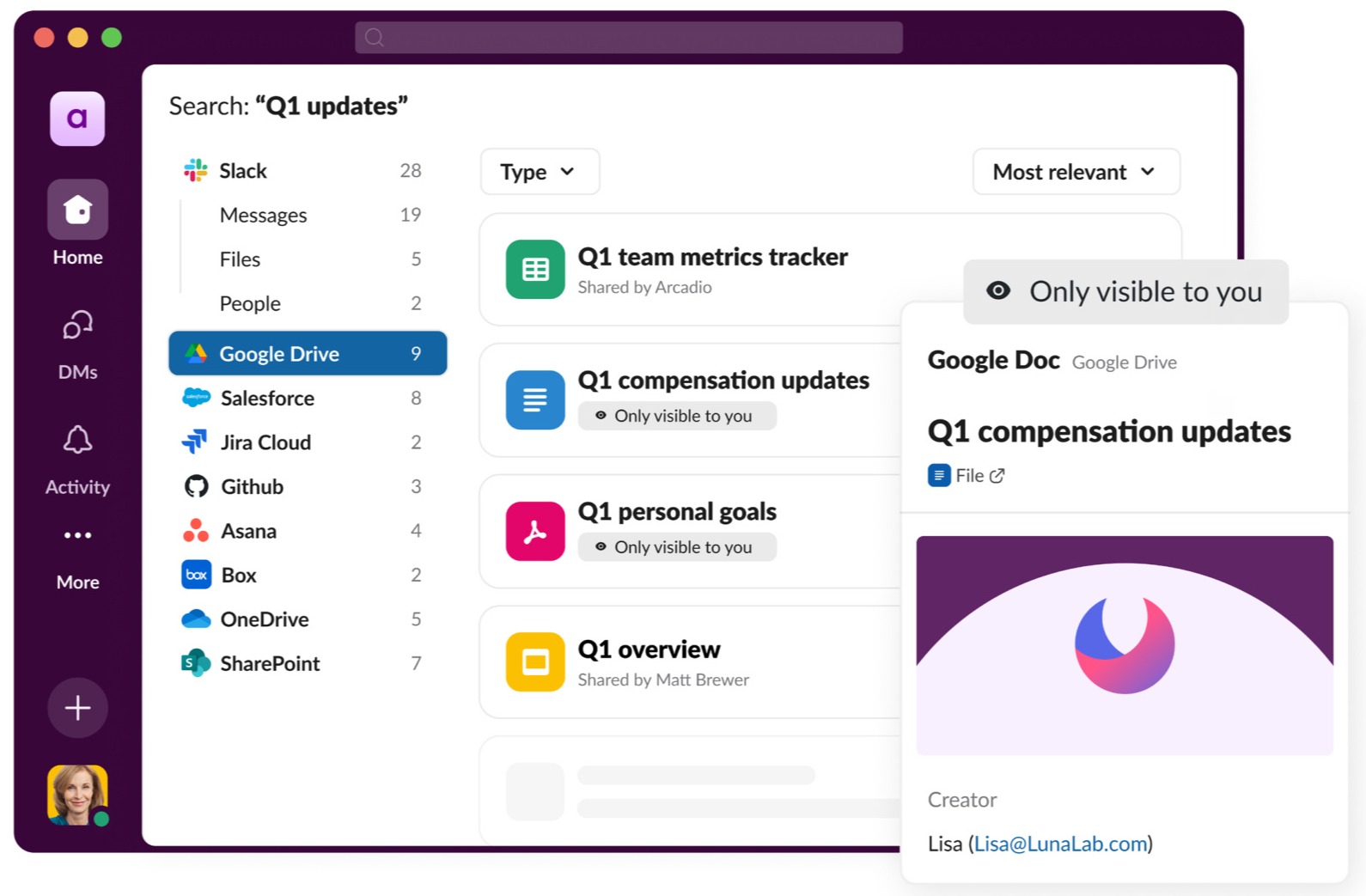
Slack’s AI-powered enterprise search ensures information and data from all departments are accessible to anyone across the company with a simple search. Slack AI is permissions-aware, ensuring that each user only receives data they should have access to.
With enterprise search, information from various business systems, documents, and apps is searchable right from Slack, where teams are already working. This ensures all employees can access relevant data, whether they’re looking for sales reports from Salesforce or engineering updates from GitHub.
Barrier Three: Information Overload
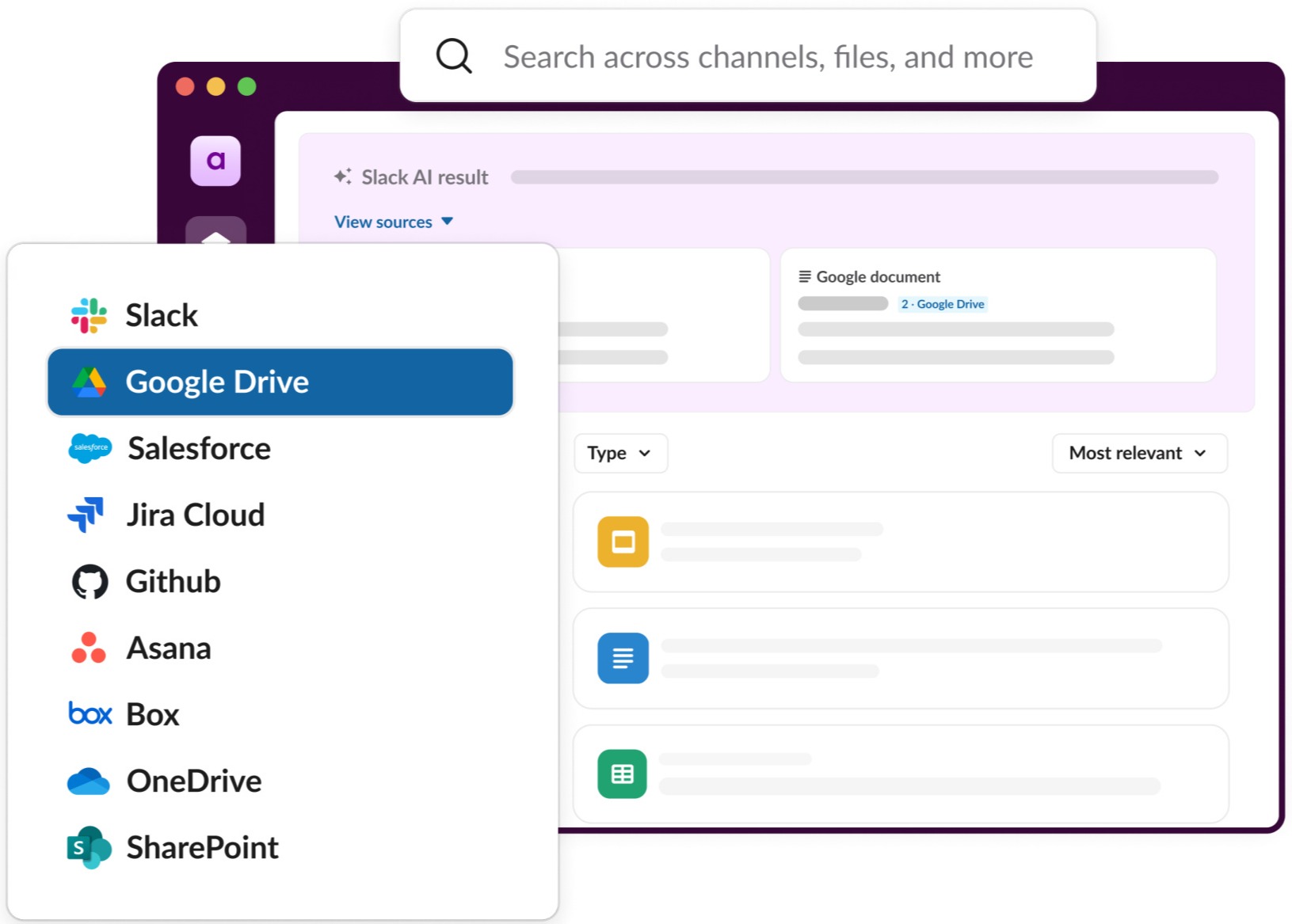
Throughout a typical workday, the average employee uses eleven applications to complete their tasks.
This requires a ton of context-switching, which can slow employees down and decrease productivity.
When switching between these apps, answering emails, and fielding DMs, it can be easy for employees to get bogged down in information overload.
How enterprise search can help:
Enterprise search consolidates corporate knowledge from multiple apps into a single, searchable interface within Slack. This means employees can find what they need in seconds without endless scrolling and context-switching.
Slack enterprise search brings all the outside information employees used to have to hunt for directly to them. The search results are also personalized to the employee’s unique role, projects, and goals, ensuring the information is relevant.
Barrier Four: Security Concerns
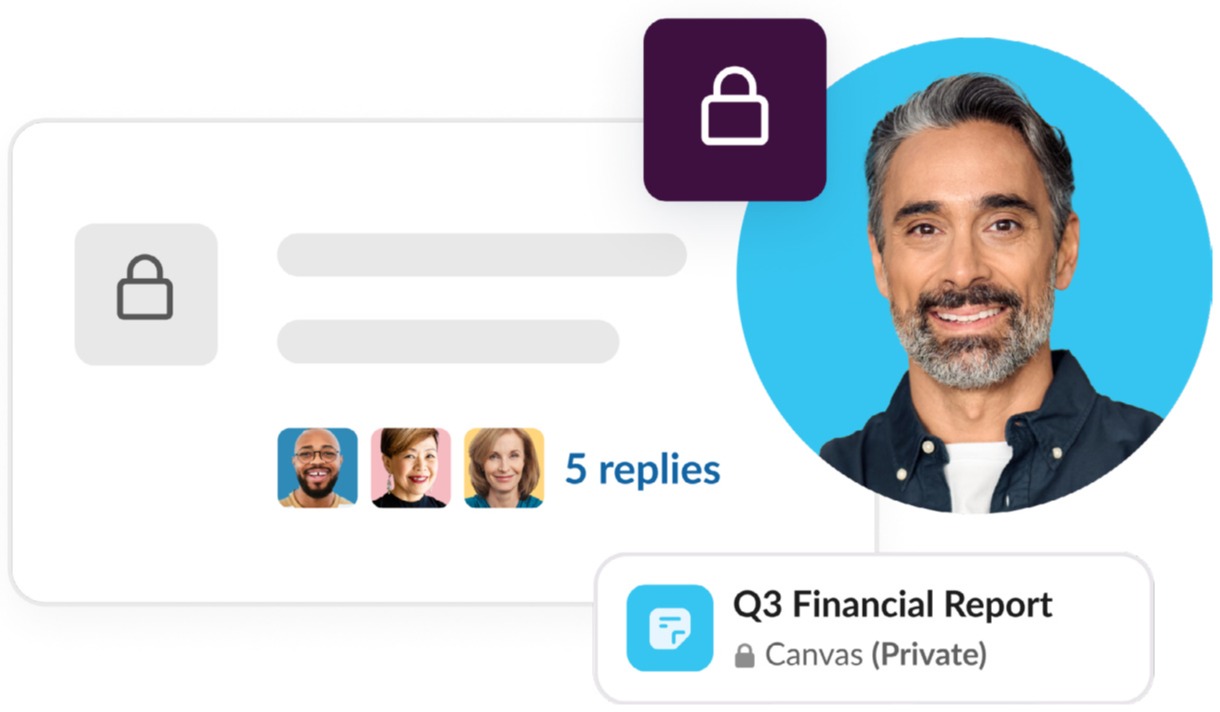
Companies handle vast amounts of proprietary information and data, and they must ensure they can store and share data in a manner that’s safe, secure, and compliant.
Many companies and employees have concerns about using AI-driven knowledge management tools due to the potential risks associated with data breaches and unauthorized access.
In fact, nearly 50% of employees worry about AI inaccuracy and cybersecurity risks.
How enterprise search can help:
Enterprise search was built to be secure and private and to adhere to Slack’s enterprise-grade compliance standards. This allows companies to fully take advantage of the opportunity to access and share corporate knowledge and data without risk.
Here are a few of the privacy standards enterprise search upholds:
- We never store data from external sources in our databases.
- External data and permissions are up to date with the external system.
- Users and admins must explicitly grant Slack access to external sources and may revoke that access at any time.
- We uphold the principle of least privilege, only requesting the authorizations we need to satisfy search queries.
- Slack AI is permissions-aware and content is always served based on the up-to-date permissions of every user.
Barrier Five: Employee Turnover
When an employee leaves a company, they take institutional knowledge with them. This can make it challenging to transfer that knowledge to existing team members.
New employees who come in also have a hard time getting up to speed on their responsibilities and tasks when corporate knowledge is spread out and not easily accessible. This can lead to a tedious onboarding process that costs the company time and resources.
Two in five HR managers spend at least three hours collecting onboarding information manually.
How enterprise search can help:
Slack enterprise search preserves insights from past employees’ conversations, shared documents, and historical data. So even when an employee leaves a company, their knowledge lives on.
These insights can then be easily shared with new hires to provide them with context and a jumping-off point for starting projects. This will save companies valuable time during the onboarding process.
Challenges of Knowledge Management FAQs
 太棒了!
太棒了!
非常感谢你提供反馈!
收到!
感谢你提供反馈。
糟糕!我们遇到问题了。请稍后重试!