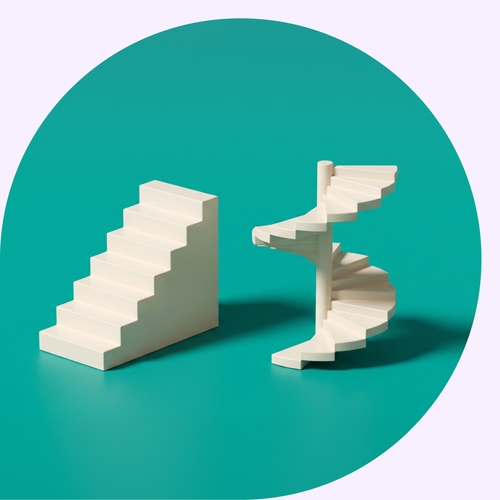
Picture two teams preparing to launch a product. One maps every requirement, deadline, and approval before work begins. The other releases a small piece, gathers feedback, and uses what it learns to plan the next round. Both teams have a process, and neither is inherently “better.” The right choice depends on how clearly the project can be defined at the outset, whether project requirements are likely to change, and what level of flexibility or predictability the work requires.
Agile and Waterfall are two distinct approaches to planning and completing work. In this article, you’ll learn what each approach offers and how to choose the right fit for your project.
Agile vs. Waterfall at a glance
A project management methodology sets the basic rules for how your team plans the work, divides responsibilities, handles changes, and moves from kickoff to completion.
Agile is generally better suited to work with changing requirements, while Waterfall fits projects with stable requirements and formal approval processes. The table below offers a quick side-by-side view of these two approaches:
| Feature | Agile | Waterfall |
| Workflow | Iterative | Sequential |
| Planning | Continuous | Upfront |
| Requirements | Evolve throughout the project | Defined before work begins |
| Delivery | Frequent releases | Single delivery at the end of the project |
| Customer involvement | Ongoing | Primarily during planning and final review |
| Testing | Throughout development | After development |
| Documentation | Updated throughout the project | Detailed before execution |
| Risk | Examined through frequent reviews and testing | Assessed through early planning and later testing |
| Communication | Continuous collaboration | Phase-based reviews and approvals |
| Best for | Projects with changing needs | Projects with stable requirements |
It is worth noting that no single approach consistently produces better results. Research from the Project Management Institute found that Agile, predictive (including Waterfall), and hybrid projects perform at comparable levels. The better choice is the one that fits the project’s specific requirements, constraints, and working environment.
What is Agile?
Agile is an iterative approach that divides a project into smaller units of work. Teams plan and complete an increment, test the result, gather feedback, and decide what should come next. Agile projects still work toward defined goals, priorities, and deadlines. The distinction is that teams do not need to lock every requirement in place before work begins. They can refine the plan as they learn and share completed increments with stakeholders.
While the term Agile is often used as shorthand for specific approaches, it actually describes a set of principles rather than a single, fixed process. Agile frameworks give teams a practical structure for applying those principles.
Common Agile frameworks include:
- Scrum organizes work into fixed periods called sprints, with defined roles and recurring planning and review sessions.
- Kanban displays work as a continuous flow and limits how many tasks can be in progress.
- Scrumban combines Scrum’s structure with Kanban’s continuous flow.
- Extreme Programming (XP) focuses on frequent software releases, close customer feedback, and disciplined engineering practices.
Even so, Agile is broader than any single framework. A team can follow Agile principles without adopting Scrum, Kanban, or any other prescribed system.
What is Waterfall?
Waterfall is a sequential methodology in which a team completes one project phase before moving to the next. Requirements, scope, schedules, costs, and approval points are usually established before execution begins. Each stage produces information or completed work that supports the following stage. Requirements guide the design, the approved design guides development, and testing evaluates the completed product against what the team agreed to build.
If those requirements are incomplete or wrong, the project may stay on schedule while still producing the wrong outcome.
This structure favors predictability and detailed documentation. Stakeholders can review the intended scope, cost, and schedule early in the process, while formal checkpoints clarify when the project can move forward. Changes to the project are still possible after the work has begun, but they may require revised plans, new approvals, or rework.
How Agile and Waterfall work
Agile project management
Although the approach allows for a significant amount of flexibility, Agile teams usually work through a repeating cycle that follows this structure:
- Choose priorities. The team selects a small set of items from a larger backlog.
- Plan the iteration. Team members define the work they expect to complete during a short cycle.
- Build and test. The team completes the selected work and checks it as the iteration progresses.
- Review the result. Stakeholders examine the finished increment and share feedback.
- Adjust the plan. The team updates the backlog and decides what should come next.
Consider a product team building an online scheduling feature. During its first iteration, the team releases a basic calendar view to a small test group. Feedback shows that users need to compare several employees’ availability at once, so the team moves that requirement higher in the backlog for the next cycle.
The goal has not changed, but the plan has.
The goal has not changed, but the plan has. Short iterations let the team respond to new information, catch problems earlier, and refine upcoming work as the project develops. That flexibility depends on regular input from the people who can answer questions and make decisions.
Waterfall project management
Waterfall is generally much more structured than Agile. A typical Waterfall project follows six phases:
- Requirements. The team documents what the project must deliver.
- Design. Requirements are translated into plans and specifications.
- Development. The product is built according to the approved design.
- Testing. The finished work is checked against the original requirements.
- Deployment. The completed product is released or implemented.
- Maintenance. The team addresses issues and makes updates after delivery.
Consider a construction team preparing to build a distribution center. Before work begins, it needs approved designs, permits, safety plans, cost estimates, materials, and a schedule. That upfront structure gives contractors, sponsors, and budget owners a shared reference point, but it also makes late revisions costly because a single design change can affect permits, purchased materials, labor, and completed work.
The biggest differences between Agile and Waterfall
Planning, workflow, and flexibility
- Agile. Planning continues from one cycle through to the next. Teams can add a new request to a future cycle and adjust other priorities to make room for it, although the final scope, cost, or completion date may be less certain.
- Waterfall. Planning happens primarily before execution. Teams gain clearer schedules, budgets, and deliverables, but a major revision may affect completed work or later phases.
Both approaches require clear rules for handling change. Agile teams need a consistent way to rank new requests and protect current priorities. Waterfall teams need a formal process for reviewing revisions that were not included in the original plan.
Customer collaboration, testing, and delivery
- Agile. Customers, sponsors, or subject-matter experts review work continuously. Their feedback can shape upcoming priorities, while regular testing helps teams find problems earlier. Usable work may be released before the full project is complete.
- Waterfall. Stakeholder involvement is concentrated around requirements gathering, approvals, and final acceptance. Full product testing usually follows development, with delivery taking place at the end.
Waterfall teams may review designs and inspect work during earlier phases, even though full product testing usually happens after development. Agile teams need stakeholders who can respond promptly and resolve conflicting feedback before it stalls the next cycle.
Documentation and risk
- Agile. Documentation develops alongside the work. Requirements may begin as short descriptions and gain detail as the team prepares to complete them. Small releases, frequent testing, and ongoing feedback help reveal uncertainty earlier.
- Waterfall. Detailed documentation is usually created before execution and may support contracts, compliance reviews, approvals, and handoffs. Risk is addressed through planning, documented requirements, and formal review gates.
Agile teams still need enough documentation to preserve context, explain why key decisions were made, and help future contributors continue the work without starting from scratch.
Advantages and disadvantages of Agile and Waterfall
Both methodologies influence how teams make decisions, respond to new information, and carry work forward. Agile tends to work better when priorities may shift during the project, while Waterfall is easier to manage when requirements, approvals, and deadlines can be set early.
Agile benefits and tradeoffs
Agile works best when the team has enough authority, access, and context to make regular decisions. Flexibility is useful only when it is supported by a disciplined process for choosing what changes and what stays fixed.
Benefits
- Agile adapts well to changing requirements. Teams can revise future priorities as customer needs, technical constraints, or business goals change, without rebuilding the entire project plan.
- Teams can deliver useful work earlier. Instead of waiting for one final release, Agile teams can complete and share smaller increments over the course of the project.
- Customer feedback can shape the work as it develops. Regular reviews give stakeholders a chance to respond before the team commits too much time to the wrong direction.
- Frequent testing can surface problems sooner. Teams can catch defects, unclear requirements, or usability issues while the affected area is still relatively small.
Tradeoffs
- Agile requires steady stakeholder participation. The process loses much of its value when decision-makers cannot review work, answer questions, or resolve conflicting feedback.
- Final scope, cost, and timing may be harder to predict. Because requirements can evolve, the finished project may look different from what the team first expected.
- Teams need strong prioritization and clear decision rights. Without them, new requests can interrupt current work and make it difficult to finish what has already started.
- Documentation can become too thin. Teams that focus only on immediate delivery may leave future contributors without enough context to maintain or extend the work.
Waterfall benefits and tradeoffs
Waterfall is most effective when the project can be defined with confidence before execution begins. Its structure supports predictability, but that same structure leaves less room to adjust when the original assumptions prove incomplete.
Benefits
- Waterfall provides a defined scope and schedule. Teams know what they are expected to deliver, when each phase should finish, and which approvals are required before work continues.
- Detailed documentation supports formal review. Requirements, plans, and decisions are recorded early, which can help with compliance, contracts, and handoffs between specialized teams.
- Budgets and staffing needs may be easier to estimate. A stable plan gives project leaders a clearer basis for calculating costs and assigning resources.
- Sequential phases clarify responsibilities. Each group can see when its work begins, what it must produce, and what the next team needs to proceed.
Tradeoffs
- Late revisions can be expensive. A change made after design or development may affect completed work, contracts, schedules, and later phases.
- Customers may wait until the end to use the result. Limited access to working versions can delay feedback that would have exposed a misunderstanding earlier.
- The process depends heavily on accurate early requirements. If those requirements are incomplete or wrong, the project may stay on schedule while still producing the wrong outcome.
- Testing happens later in the lifecycle. Significant issues may not appear until development is complete, when corrections are more difficult.
When to use Agile, Waterfall, or a hybrid approach
The right methodology depends more on the project than on the team’s usual way of working. Start by looking at how stable the requirements are, how often stakeholders need to weigh in, and how difficult it would be to revise completed work. Project complexity also plays a role; work with many unknowns may benefit from Agile iteration, while complex projects with fixed dependencies and approval requirements may need Waterfall structure or a hybrid approach.
Agile for evolving projects
Agile is a strong fit when:
- Requirements are likely to change.
- Customers can provide regular feedback.
- Work can be delivered in useful increments.
- Testing and experimentation will shape future decisions.
Agile is particularly well suited to software development, digital products, product management, marketing campaigns, and experimental initiatives. It also works well for collaborative, cross-functional teams that can make decisions without long approval delays.
Waterfall for predictable projects
Waterfall may be the better choice when:
- Requirements are stable and well documented.
- Work must happen in a fixed sequence.
- Formal approvals or extensive documentation are required.
- Revisions could create serious cost, safety, legal, or logistical concerns.
Construction, engineering, manufacturing, government programs, healthcare projects, and other compliance-heavy work often use Waterfall practices. That does not mean every project in those fields should follow the same method, but the approach can be a practical fit when the work needs a defined plan and clear checkpoints.
Hybrid project management
The question of Waterfall vs. Agile methodology is not strictly a one-or-the-other decision. Teams can incorporate both methodologies using a hybrid approach that applies Agile and Waterfall practices to different parts of the same project.
In a hybrid system, a team might:
- Use Waterfall for budgets, procurement, compliance, and major milestones.
- Use Agile cycles for design, development, testing, or campaign execution.
- Set fixed project boundaries while allowing the delivery team to adjust how it completes the work.
A public-sector technology project, for example, may have non-negotiable procurement rules and reporting dates. Within those boundaries, the development team could still release features in increments and gather user feedback.
The right methodology depends more on the project than on the team's usual way of working.
Be aware that hybrid work needs clear rules. Everyone should understand which requirements are fixed, what the delivery team can revise, and how updates will be documented and approved.
Collaboration across Agile and Waterfall teams
Because priorities can easily change from one cycle to the next, Agile teams must communicate frequently to promote team alignment and ensure that everyone is working toward the same goals. Waterfall teams can rely more heavily on documented requirements and formal approvals, with clear handoffs between phases.
No matter which method they adopt, teams should:
- Keep project status, owners, deadlines, and dependencies visible.
- Record decisions where team members can find them later.
- Use asynchronous updates for routine progress reports and review preparation.
- Connect project tools with the conversations around the work.
- Automate repetitive tasks, such as recurring reminders, approvals, and status requests.
Choose the approach that fits your team and your work
Agile, Waterfall, and hybrid approaches can all support successful projects. The right choice is the one your team can apply consistently, with clear ownership, reliable communication, and a process for handling decisions as the work progresses.
Slack collaboration supports Agile, Waterfall, and hybrid teams by providing a centralized platform for project management:
- Channels keep discussions, files, and project history organized in one place, giving Agile teams a record of each iteration and Waterfall teams a clear history of approvals and handoffs.
- Lists help teams track tasks, owners, deadlines, and project progress without separating the work from the conversations around it.
- Canvases give teams a place to document requirements, project briefs, decisions, and reference material that may change over time or guide a fixed project phase.
- Workflow Builder can automate recurring updates, approval requests, intake forms, and other routine steps in either methodology.
- Integrations bring updates from project management and file-sharing tools into Slack, so teams can follow the work without losing the discussion and context around it.
Slack provides a shared place to communicate, document progress, and carry context from planning through delivery, regardless of the project methodology you choose.
Agile vs. Waterfall FAQ
 훌륭해요!
훌륭해요!
피드백을 주셔서 감사합니다.
알겠습니다!
피드백을 주셔서 감사합니다.
죄송합니다. 문제가 발생했습니다. 나중에 다시 시도해주세요.