Diese Woche auf der Dreamforce haben wir Slack eines seiner bisher größten Upgrades verpasst: die vernetzte Oberfläche für KI und Salesforce, die für dein gesamtes Team funktioniert. Jedes Unternehmen investiert gerade in KI, doch es fehlen zwei entscheidende Dinge. Erstens: der Kontext aus Unterhaltungen, der ein langfristiges Gedächtnis und Einblicke liefert und KI damit präziser, handlungsfähiger und vertrauenswürdiger macht. Zweitens: eine kollaborative Oberfläche, die es Mitarbeitenden ermöglicht, diese KI-Tools gemeinsam zu nutzen und voneinander zu lernen. In Slack kommt beides zusammen. So ist Slack zum Betriebssystem für die Arbeit geworden, das alle Mitarbeitenden, Agenten und Plattformen miteinander vernetzt – mit Slackbot als KI-Teammitglied, das dich durch deinen Arbeitsalltag begleitet. Genau das macht Slack zum Einstieg in das agentbasierte Unternehmen – und für Salesforce-Kund:innen auch für Salesforce selbst.
Vorhang auf für Slackforce: Der zentrale Einstieg in Salesforce
Seit 25 Jahren bauen Salesforce-Kund:innen umfangreiche Kundendaten und Workflows auf, um ihr Geschäft zu steuern. Jetzt können diese Daten dort zum Einsatz kommen, wo Entscheidungen getroffen werden: direkt in der Unterhaltung. Die heutigen Neuerungen schließen diese Lücke und binden Salesforce-Daten direkt in die Unterhaltung ein statt sie in einem weiteren Tab zu belassen. So zahlen sich die bereits getätigten Investitionen in CRM und IT weiterhin aus, anstatt nur einen Tab entfernt ungenutzt zu bleiben.
Dashboards, Präsentationen und Berichte, die Daten teilbar machen, erforderten früher Spezialist:innen – etwa ein Design- oder BI-Team – und wertvolle Zeit. Heute reicht ein Satz. Beschreibe, was du brauchst, und Slackbot erstellt eine Slackforce Live-Ansicht: eine interaktive Live-Oberfläche, die dein Team gemeinsam filtern, erkunden, kommentieren und nutzen kann. Pinne sie in einen Channel und sie bleibt mit der Quelle verbunden. Und bald wird sie sich automatisch aktualisieren, sobald sich die Daten ändern. Für Salesforce-Kund:innen werden Pipeline, Prognosen, offene Fälle oder Kampagnenberichte aus Sales Cloud, Service Cloud, Data 360 oder Tableau direkt aus der Unterhaltung heraus zu einer interaktiven Slackforce-Oberfläche – unter Berücksichtigung der bestehenden Berechtigungen und so aufbereitet, dass die Daten direkt genutzt werden können.
Slackbot ist jetzt das KI-Teammitglied, das dein gesamtes Team produktiver macht
Die meisten Mitarbeitenden kommen beim Einsatz von KI kaum über die ersten Schritte hinaus – von einfacher Suche und Zusammenfassungen bis hin zu einmaligen Fragen und Antworten, die das Chatfenster nie verlassen.
Slackbot durchbricht dieses Muster und bringt KI aus dem privaten Chat in die Channels, in denen Teams bereits arbeiten. So macht Slackbot KI für das gesamte Team einfach zugänglich. Slackbot basiert auf Claude und macht Aufgaben, die Fachwissen erfordern, im Dialog für alle erledigbar. Und Slackbot ist bereits dort verfügbar, wo du ohnehin arbeitest. Seit der Einführung hat Slackbot die Marke von einer Million monatlich aktiven Benutzer:innen überschritten – ein Plus von 145 % gegenüber dem Vorquartal.
Jetzt kannst du Slackbot auch in einem Channel taggen, sodass das gesamte Team gemeinsam auf der Antwort aufbauen kann. Wenn KI in Channels zum Einsatz kommt, können alle die Ergebnisse direkt nutzen. Gleichzeitig verbreiten sich erfolgreiche Prompt-Muster und das Wissen darüber, wie sich KI effektiv einsetzen lässt, sodass Teams leichter voneinander lernen können. Slackbot greift auf alle Offenen Channels zu, auf die auch du Zugriff hast. So trägt jede Antwort zu immer präziseren und effektiveren Ergebnissen bei – für dich, deine Agenten und das gesamte Team.
Jetzt ist Slackbot auch in der Salesforce Lightning Experience verfügbar und bringt denselben Kontext, dieselben Automatisierungsfunktionen und die effektiven KI-Funktionen direkt ins CRM. Statt zu Slack zu wechseln, um eine Frage zu stellen oder Unterstützung zu erhalten, können Führungskräfte im Vertrieb oder Kundenservice-Mitarbeitende direkt neben dem jeweiligen Datensatz ein Chatfenster öffnen. Dort kann Slackbot beispielsweise automatisch Deals in der Pipeline kennzeichnen, bei denen seit mehr als zwei Wochen nichts passiert ist, oder bei einem Fall zu einer verspäteten Bestellung den Versandstatus und den Bestellverlauf abrufen und einen Lösungsvorschlag formulieren – ohne dass dafür die Seite verlassen werden muss. Slackbot ist in den Slack-Tarifen Business+ und Enterprise+ enthalten. Kund:innen mit diesen Tarifen können Slackbot damit sowohl in Slack als auch in Lightning nutzen. Kund:innen, deren Slack-Tarif Slackbot nicht umfasst, sowie Salesforce-Kund:innen, die Slack noch nicht nutzen, können über Flex Credits in Lightning auf Slackbot zugreifen. So lässt sich Slackbot flexibel entweder über den bestehenden Slack-Tarif oder über Flex Credits nutzen, ohne Slackbot separat erwerben zu müssen.
Und Slackbot wird noch effektiver. Mit dem Vollbildmodus (ab sofort verfügbar) erhält Slackbot einen eigenen, ganzseitigen KI-Workspace in Slack – ideal für umfangreichere Aufgaben wie Recherche, Texterstellung, Analyse und Dateigenerierung, ohne die Unterhaltung verlassen zu müssen. Erstelle ein mehrseitiges Strategie-Briefing oder ein Post-Mortem und übertrage das fertige Dokument direkt in eine Live-Ansicht, die du in einem Channel anpinnst, damit dein Team in Echtzeit darauf reagieren kann. Ab diesem Herbst kannst du dank bidirektionaler Sprachkommunikation mit Slackbot sprechen wie mit Kolleg:innen – und Slackbot antwortet dir auch per Sprache. Dabei kann Slackbot konkrete Aktionen ausführen, etwa einen Datensatz aktualisieren oder eine Automatisierung starten. Führungskräfte können Slackbot so auch unterwegs per Spracheingabe bitten, einen Deal in die nächste Phase zu verschieben, und erhalten direkt eine gesprochene Bestätigung – ganz ohne Tippen. Ebenfalls ab diesem Herbst kann Slackbot mithilfe der Videogenerierung Produkt-Updates, Demos oder Kampagnen-Briefings direkt in der Unterhaltung in fertige Videoclips verwandeln, ohne dass dafür zu einem anderen Tool gewechselt werden muss.
Coding ist jetzt Teamsache – mit Slack Code
KI hat Entwickler:innen schneller gemacht, doch dieser Geschwindigkeitsvorteil blieb im Tab einer einzelnen Person verborgen – für alle anderen unsichtbar, bis die Ergebnisse später in einem Pull Request oder einem Meeting auftauchten. Der Rest des Teams – PMs, Designer:innen und andere Entwickler:innen – konnte weder sehen, woran gearbeitet wurde, noch Feedback geben oder darauf aufbauen.
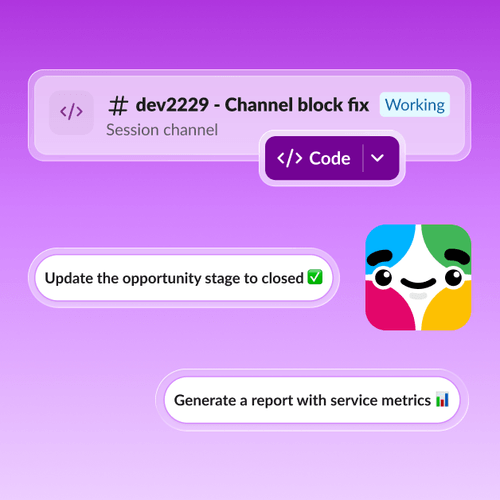
Coding findet jetzt dort statt, wo das Team ohnehin arbeitet. Mit Slack Code kommen Personen und KI-Agenten an einem speziellen Ort zusammen – dem Code-Channel – um Code live zu schreiben, zu überprüfen und zu veröffentlichen, während alle den Plan, den Code-Diff und eine Vorschau in Echtzeit sehen können. Ein:e Produktmanager:in kann einen Fehler kennzeichnen, ein Agent kann die Lösung vorschlagen, und ein:e Entwickler:in kann sie überprüfen und veröffentlichen – ganz ohne Ticket, Meeting oder Wartezeit. Bei kritischen Schritten, etwa wenn Änderungen in Produktion gebracht werden sollen, bereitet der Agent seine Arbeit direkt in der Unterhaltung für die Freigabe durch ein Teammitglied vor. Agenten von Anthropic, Cognition, GitHub, Vercel, OpenAI und weiteren Anbietern arbeiten bereits gemeinsam mit deinem Team in diesen Channels. So wird aus der Lösung einer einzelnen Person eine Lösung für das ganze Team.
Slack ist bereits der Ort, an dem unsere Teams arbeiten – und damit auch der richtige Ort für die Zusammenarbeit mit Agenten. Für einen kurzen Austausch reicht ein Thread, doch die Entwicklung mit Agenten braucht einen eigenen Ort. In einem Code-Channel kann das gesamte Team die Arbeit des Agenten verfolgen, ihn steuern und gemeinsam eine Vorschau bereitstellen – mit dem gesamten Kontext und Verlauf an einem Ort. So wird Softwareentwicklung zur Teamarbeit.
Ab heute sind neue Agenten von Cedar, Coderabbit, Datadog, Factory, Lovable, Mistral, NanoClaw, Replit, Rhythms und Snowflake verfügbar.
Vorschau: Slack für Frontline-Teams
Slack gibt außerdem einen ersten Einblick in Slack Frontline – eine einfache, für Mobilgeräte optimierte Lösung für Teams, die nicht am Schreibtisch arbeiten, etwa im Einzelhandel, in der Fertigung oder im Gesundheitswesen. Dort können Mitarbeitende an einem zentralen Ort ihre Schichten verwalten, auf Unternehmensmitteilungen zugreifen und die Unterstützung erhalten, die sie für einen reibungslosen Arbeitsalltag brauchen – und das als Teil desselben Betriebssystems für die Arbeit, das auch den Rest des Unternehmens unterstützt. Ob außerhalb des Büros oder im Konferenzraum: Das Prinzip ist dasselbe. Deine Mitarbeitenden, deine Agenten und alle Apps, auf die du angewiesen bist, arbeiten an einem Ort zusammen. Genau das macht Slack zur optimalen Benutzeroberfläche für das gesamte Unternehmen – nicht nur für die Bereiche, in denen am Schreibtisch gearbeitet wird.
Verfügbarkeit
- Slackbot in Lightning Experience, Slackforce Live-Ansichten, Vollbildmodus und Slack Code sind ab sofort verfügbar.
- Slackbot in Channels befindet sich in einer frühen Pilotphase. Bidirektionale Sprach- und Videogenerierung folgt noch in diesem Jahr.
- Slack für Frontline-Teams ist als Vorschau verfügbar; die allgemeine Verfügbarkeit ist für eine zukünftige Version geplant.
Besuche unsere Innovations-Webseite für frühere Neuheiten.
Bitte beachte, dass einige Funktionen in deinem Workspace möglicherweise nicht sofort verfügbar sind – abhängig vom Einführungszeitplan, deinem Slack-Lizenzplan oder zusätzlichen Lizenzanforderungen. Wenn du weitere Informationen zur Verfügbarkeit von Funktionen benötigst, frage deine Admins nach den Lizenzplänen für deinen Workspace.
Möchtest du mehr erfahren? Kontaktiere uns.
 Super!
Vielen Dank für dein Feedback!
Okay!
Vielen Dank für dein Feedback.
Hoppla! Wir haben gerade Schwierigkeiten. Bitte versuche es später noch einmal!